top of page
INTERNSHIPS
YOU CAN SEE MORE INFORMATION ABOUT MY INTERNSHIPS BY CHECKING MY LINKEDIN ACCOUNT:


EMBRAER
CONTEXT
This internship was part of Embraer’s winter internship program, an initiative designed to attract students studying abroad and expose them to real industrial projects within the company. Embraer is the third largest aerospace manufacturer in the world, with a strong presence in commercial, executive, and military aviation.
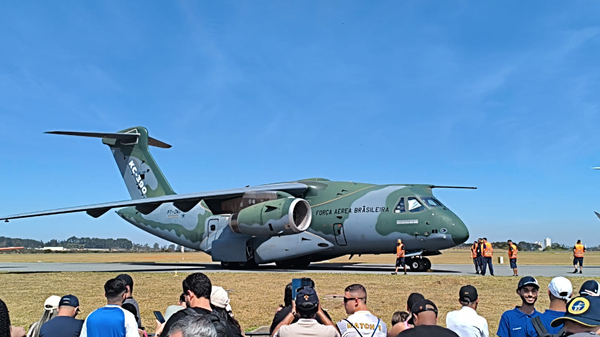
I was allocated to the MISCLAW team (Mission Control Laws) of the KC-390 program, a multi-mission military transport aircraft. The team is responsible for mission-related control laws and their interaction with aircraft systems, operating in a highly multidisciplinary environment that involves avionics, systems engineering, and simulation.
WHAT I DID
Military aircraft such as the KC-390 are delivered to different countries, each with specific operational requirements and mission profiles. As a result, systems are frequently adapted, updated, or newly developed. Whenever such changes occur, the Onboard Maintenance System (OMS) must be updated. The OMS is responsible for displaying system states and parameters to the pilot in real time, as well as generating maintenance reports for ground crews.
Before my project, the design of OMS pages followed a manual and inefficient workflow. Engineers would model the intended cockpit display pages using PowerPoint slides, which were then sent to another team responsible for implementing the pages directly in the aircraft avionics. This process often led to rework, interpretation errors, and duplication of effort, especially when system parameters needed to be modified or reused in simulation models.
My project consisted of developing a new interface inside an internal Embraer software tool that allowed OMS pages to be created directly within the engineering environment. The goal was to replace static visual mockups with a structured, editable model that could be reused downstream. The interface had to be as fast and intuitive as PowerPoint, even though the software was not originally designed for this purpose.
The solution was built using a combination of native software blocks and custom components developed in C++. The result was a simple, modular, and easily editable page model that significantly reduced rework for the avionics implementation team. In addition, the new approach enabled a direct link between the OMS page definition and the team’s Simulink mission models, allowing system parameters to be reused consistently across simulation and avionics design.
The project was successfully integrated into the team’s workflow and validated within the KC-390 mission modeling environment.
Images from this project cannot be shared due to confidentiality restrictions.
LEARNINGS
Beyond the obvious technical development in C++ and system modeling, this internship significantly strengthened my engineering mindset. I learned to approach problems with critical thinking, questioning what was actually being requested, understanding constraints, and identifying the most effective and sustainable way to deliver a solution. This shift from simply “implementing tasks” to thinking in terms of efficiency, impact, and integration was one of the most valuable outcomes of the experience.
More broadly, the internship clarified why aerospace engineering resonates so strongly with me. Not because of a generic fascination with airplanes, but because an aircraft represents one of the highest levels of human knowledge integration. It brings together mechanics, electronics, software, control theory, human factors, certification, and operational constraints into a single coherent system. Experiencing this complexity firsthand made it clear that aerospace engineering is a concrete expression of both my personal interests and my professional profile.
I also learned that no meaningful engineering work is done in isolation. Collaboration, communication, and teamwork are essential, especially in large and complex organizations. Progress depends on the ability to interact with different teams, understand their constraints, and build solutions that fit into a much larger system than one’s own scope.
Finally, this experience taught me a fundamental lesson about engineering practice: strong technical foundations are necessary, but they are rarely sufficient on their own. You are not always fully prepared for the problems that arise. What truly matters is the ability to learn quickly, adapt, be creative, and stay motivated. With curiosity, initiative, and genuine interest in what you are building, even unfamiliar challenges become solvable.
For the invaluable learnings I gained from this experience, I am deeply grateful to everyone involved, and especially to Briza Aiki, Karen Veloso, and my mentor Mateus Marocolo. You added tremendous value to my life. Thank you.



safran

CONTEXT
I was accepted for an internship at Safran Tech in Châteaufort, near Paris, where I will work on a machine learning project related to the completion of thermochemical treatment databases. My mission will focus on studying heterogeneous industrial data, identifying missing information, and exploring mathematical and machine learning strategies to estimate missing values, especially in profiles such as hardness, concentration, and depth. The internship will also involve understanding processes such as carburizing and nitriding, which are used to improve the surface properties of mechanical parts.
WHAT I DID
LEARNINGS
TRATO

CONTEXT
This internship was carried out at Trato-TLC, a French company specialized in the design and manufacturing of lighting systems and luminaires. I joined the company in January 2025 as part of the mandatory stage ouvrier required by École Centrale de Lille. The objective of this internship was to gain firsthand experience with manual and operational work, in order to better understand the realities of production environments and the people involved in them.
WHAT I DID
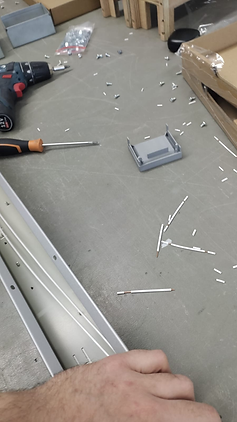
My role was focused on hands-on production work related to the assembly of lamps and lighting fixtures. This involved practical tasks such as assembling electrical circuits, handling electronic components, wiring, and testing finished products. I regularly worked with tools and equipment such as screwdrivers, drills, measuring instruments, and various fastening systems, which required precision, attention to detail, and respect for safety procedures. Through this experience, I developed a concrete understanding of how theoretical concepts in electronics translate into real, physical products.
LEARNINGS
Beyond the obvious gain in practical knowledge of electrical circuits and electronic components, this internship had a significant impact on my communication skills in French. Working in a fully French-speaking environment required constant interaction, asking questions, clarifying instructions, and engaging socially with colleagues. As a result, my French improved dramatically over the course of the month, both technically and conversationally.
Equally important, this experience gave me a deep appreciation for manual work. Being directly involved in production highlighted the skill, precision, and responsibility required to transform designs into reliable physical products. It reinforced my respect for the craftsmanship behind engineering solutions and reminded me that high-level design only has value when it is grounded in well-executed hands-on work.




bottom of page